

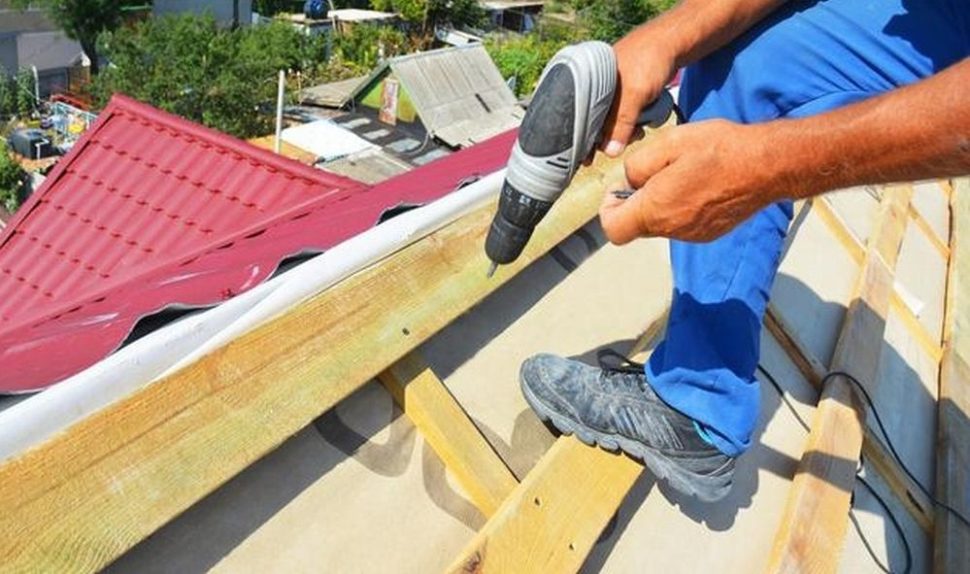
How Do Roofers Decide What Can Be Repaired and What Needs to Be Replaced?
Discovering roof damage immediately raises a difficult question: can the affected area be repaired, or has the roof reached the point where replacement makes more sense?
The answer is rarely based on one missing shingle or a single ceiling stain. Roofers look at where the damage occurred, how far it extends, what condition surrounds it, and whether the underlying materials are still sound. The roof’s overall condition matters just as much as the visible problem.
Understanding that process can help homeowners see why two roofs with similar-looking damage may receive very different recommendations.
Localized Damage Is Often More Repairable
A problem limited to one small section generally gives a roofer more repair options than damage spread across several slopes.
A handful of shingles damaged by wind, for example, may be replaceable if the surrounding roofing remains secure and in good condition. A small flashing problem around a vent or chimney may also be addressed without disturbing the entire roof.
The important word is localized.
If the visible problem is only one part of widespread deterioration, replacing a small section may not provide a sensible long-term solution.
The Surrounding Material Matters
Roofers do not evaluate a damaged shingle in isolation.
They look at the material beside it. If neighboring shingles remain flexible, secure, and generally intact, a localized repair may blend into a roof that still has useful service ahead.
If the surrounding area is brittle, heavily worn, loose, or repeatedly developing problems, disturbing it to complete a small repair may expose a larger concern.
Finding the Source of a Leak Comes Before Choosing the Fix
Water stains can make roof problems deceptive.
A stain on an upstairs ceiling does not necessarily sit directly below the point where rain entered. Water may travel along decking, rafters, or other surfaces before becoming visible inside the house.
That means Professional roof repair should begin with locating the actual entry point rather than simply patching the roof area above the stain.
Once the source is found, the roofer can determine whether the problem involves a small repairable detail or a broader section of the roofing system.
Flashing Problems May Not Require a New Roof
Roofs contain numerous transitions where water must move around another surface.
Chimneys, vents, skylights, walls, and valleys commonly involve flashing. If flashing becomes damaged or displaced while the surrounding roof remains in suitable condition, correcting that detail may solve the problem without replacing large areas.
The same principle applies to some roof penetrations.
A leak near a vent does not automatically mean the main roofing material has failed. The connection around the opening may be the part that needs attention.
Roof Decking Can Change the Scope of Work
The condition below the visible roof covering also influences the repair decision.
Moisture that has reached the roof deck can damage the material supporting the roofing system. If the affected section is limited and accessible, the damaged decking may sometimes be replaced as part of a targeted repair.
Widespread deterioration creates a different situation.
Hidden Conditions May Appear During the Work
Not every decking problem can be seen before roofing materials are removed.
A roofer may begin with what appears to be a limited repair and discover that water has affected a larger area beneath the surface. At that point, the recommended scope may change.
Homeowners should ask how hidden damage will be handled before work begins so an expanded repair does not come as a complete surprise.
Material Matching Can Affect Repair Practicality
A repair usually requires new material to integrate with the existing roof.
The replacement product needs to be suitable for the roofing system, and contractors may also try to match the appearance of existing materials as closely as practical.
This is where availability can influence the job.
A roofing supplier may carry shingles, flashing, underlayment, vents, fasteners, and related components needed to complete different types of roof repairs. If an older roofing product has been discontinued, however, finding a close match may be more difficult.
Appearance is not the only concern. The replacement material also needs to be appropriate for the application.
Repeated Repairs Can Point to a Wider Problem
One repair does not necessarily signal that a roof needs replacement.
A pattern of repairs deserves more attention.
If new leaks repeatedly appear in different places, shingles continue to loosen, or several roof details require work within a relatively short period, the issue may no longer be truly localized.
At that point, homeowners should compare the cost and disruption of continuing repairs with the condition of the roof as a whole.
Repair History Provides Useful Context
Keep records of previous work.
Photos, invoices, notes about leak locations, and dates of earlier repairs can help show whether the same problem keeps returning or several unrelated issues have developed.
That history can make a later roof assessment more informative.
Storm Damage Is Evaluated by Extent, Not Just Appearance
Storms can cause isolated or widespread damage.
A branch may affect one small roof section, while high winds or hail can involve several slopes. What matters is how much of the roofing system has been affected and whether individual repairs can restore the damaged areas properly.
Homeowners should avoid judging storm damage only from the ground. Some conditions may be difficult to see without closer inspection.
The presence of a few obvious damaged spots does not reveal what happened elsewhere on the roof.
Roof Age Provides Context but Does Not Decide Everything
Homeowners often ask whether age alone determines when replacement is necessary.
It does not.
An older roof with limited damage may still present a different situation from a similarly aged roof with widespread deterioration, recurring leaks, damaged decking, and repeated repairs.
Roofers combine age with physical condition rather than treating the installation date as the only deciding factor.
The type of roofing material and its maintenance history can also influence what is found during inspection.
Large Areas of Deterioration Make Repairs Less Practical
Repairs make the most sense when they can restore a defined problem without leaving major concerns immediately around it.
If deterioration covers large sections of the roof, repairing individual spots can become a cycle. One area is fixed, another fails, and homeowners continue paying for work without addressing the overall condition.
Widespread curling, cracking, missing material, numerous leaks, or significant underlying damage may push the recommendation toward replacement.
The decision should be based on what the inspection shows rather than the assumption that replacement is always better.
Cost Should Be Compared Over More Than One Repair
A small repair generally costs less than replacing an entire roof, but the immediate price does not tell the whole story.
Suppose a roof requires one isolated repair and otherwise remains in good condition. Replacement would likely be far more work than the problem requires.
Now consider a roof that has needed several repairs and continues developing new problems. Spending money repeatedly on isolated work may become less attractive.
Homeowners should compare the likely scope of future repairs with the condition of the remaining roof, not simply ask which option costs less today.
The Best Decision Comes From the Whole Roof
Repair versus replacement is rarely decided by one symptom.
Roofers consider the extent of damage, condition of surrounding materials, leak source, flashing, decking, repair history, material availability, and the overall state of the roof. Localized problems often leave room for targeted work, while widespread or recurring deterioration can make replacement more practical.
For homeowners, the useful question is not simply, “Can this spot be repaired?” It is, “Will repairing this spot leave the rest of the roof in dependable condition?”
Looking at the roof as a complete system provides a much clearer answer than judging the decision from one damaged shingle or one stain on the ceiling.


