

How Can Roof Drainage and Landscape Design Work Together to Manage Rainwater?
Rainwater does not stop being a roofing concern once it reaches the edge of the house. After flowing down the roof and into gutters, it still needs somewhere sensible to go. If the surrounding property directs that water back toward the foundation, across walkways, or into low areas, a well-functioning roof drainage system is only doing part of the job.
The roof and landscape are often planned separately, yet they handle the same water at different stages. Gutters collect runoff from above, downspouts bring it to ground level, and grading, planting areas, paved surfaces, and drainage features influence what happens next.
Looking at the entire route can reduce standing water and make outdoor areas easier to use after rain.
Begin With Where Roof Water Reaches the Ground
The first step is to identify where downspouts discharge.
Walk around the house and note whether water exits onto lawn, planting beds, pavement, gravel, or another surface. Then look at the direction the ground slopes from that point.
A downspout can function correctly while still releasing water into an unsuitable location. If the surrounding grade slopes back toward the house, runoff may return toward the foundation instead of moving away.
Watch the Property During Rain
A dry yard does not always reveal its drainage patterns.
Observing the property during rainfall can show where gutters overflow, which downspouts handle concentrated flow, where water crosses walkways, and which areas begin collecting puddles.
These observations provide useful information before changing either the roof drainage or landscape layout.
Keep Gutters and Downspouts Part of the Plan
Gutters need clear paths to move roof runoff toward their outlets. Leaves and debris can restrict that flow and cause water to spill over the edge.
CA Roofing lists gutters and downpipes alongside its other Roofing services, reflecting the close relationship between the roof surface and the system that carries water away from it.
Downspout condition matters too. A damaged or disconnected section can release water beside the house instead of at the intended discharge point.
Before redesigning the surrounding yard, make sure the water leaving the roof is reaching the locations the landscape plan expects.
Use Grading to Encourage Water to Move Away
Landscape grading establishes the general direction surface water travels.
A patio, lawn, garden, or walkway may look level to the eye while still having enough slope to influence runoff. Problems can develop when new outdoor work changes those relationships.
For example, raising a planting bed or installing a patio without considering nearby drainage can alter the route water takes after leaving a downspout.
Check the Whole Area, Not Just the Downspout
Moving a downspout outlet a short distance may solve one puddle while creating another.
Follow the likely water path beyond the discharge location. Does it move toward a neighboring hard surface? Cross a main path? Collect behind a retaining feature?
Drainage works better when the route is considered from the roof edge to the final low point rather than one section at a time.
Think Carefully About Patios and Walkways
Hard surfaces change how rainwater behaves because water cannot soak into them in the same way it may soak into suitable planted or soil areas.
Their slope becomes particularly important.
A patio that sends water toward the house can create an obvious problem. One that sends all runoff toward a narrow planting bed may overwhelm that area during heavier rain.
Walkways can also unintentionally act like channels, carrying water toward gates, steps, entrances, or other low points.
Planning elevations before installation gives homeowners more control over where runoff travels.
Use Permeable Areas Strategically
Not every outdoor surface needs to shed water as quickly as possible.
Depending on site conditions, suitable landscaped or permeable areas may allow some rainfall to soak into the ground rather than immediately moving across the property.
Abloom includes landscape design, gardens, patios, driveways, and permeable driveway work within its service offerings, showing how surface choices can be considered as part of the broader yard plan.
Homeowners working with ottawa landscapers can discuss how planting areas, hardscape, grading, and drainage routes relate to the water arriving from roofs and other surfaces.
The right approach depends on the property rather than a single drainage feature used everywhere.
Keep Downspout Water Away From Main Walking Routes
A poorly placed outlet can make otherwise attractive landscaping inconvenient.
If water discharges directly beside a pathway, it may leave the area wet whenever it rains. An outlet near steps or an entrance can also send runoff across places people use frequently.
Think about normal movement through the property when selecting drainage routes.
Protect High-Use Outdoor Areas
Patios, outdoor kitchens, seating areas, and main paths should not become collection points for roof runoff.
If a downspout currently empties near a planned entertaining space, address that conflict before installing finished paving, furniture, or planting.
Changing the route beforehand is usually easier than altering a completed outdoor area later.
Do Not Direct Concentrated Runoff Into Delicate Planting
Plants need water, but that does not mean a downspout should automatically discharge into the nearest garden bed.
Roof runoff can arrive quickly and in concentrated amounts. A small bed may not be suited to receiving all the water collected from a large roof section.
Strong flows can disturb mulch or soil and create overly wet conditions in one part of the bed.
Planting areas used in a drainage strategy should be designed with the expected flow, soil conditions, plant selection, and overflow route in mind.
Consider Retaining Walls and Changes in Grade
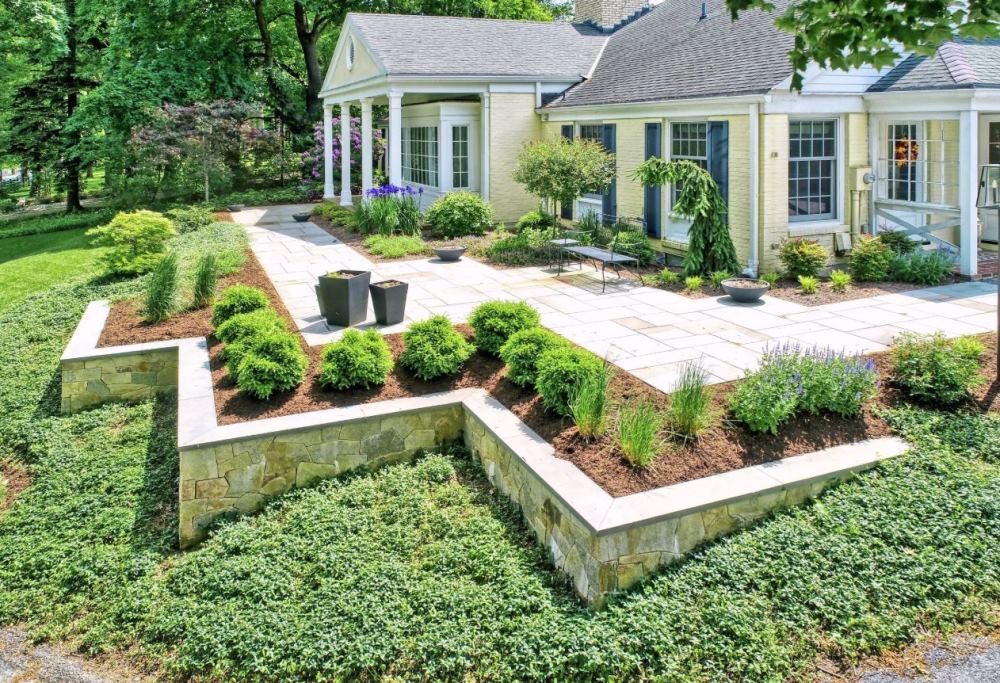
Retaining walls can make sloped yards more usable, but they also change how water travels through the landscape.
Water moving downhill needs a suitable route around or through the redesigned area. A wall should not be treated simply as a decorative barrier placed across an existing drainage path.
This becomes especially important when a downspout releases water uphill from a retaining feature.
Roof drainage and grading plans should be reviewed before walls, steps, or raised beds make the route harder to change.
Watch for Water Near the Foundation
One of the main goals of coordinating roof and landscape drainage is keeping concentrated runoff from repeatedly collecting beside the house.
Check areas near downspout outlets for erosion, persistent dampness, low spots, or visible water accumulation.
A problem near the foundation may not be caused by the roof itself. The gutter can be working as intended while the ground below sends the water in the wrong direction.
That distinction matters because changing roofing components alone may not correct a landscape-grading problem.
Plan Outdoor Renovations Around Existing Drainage
A major backyard project can change much more than appearance.
New pools, decks, patios, driveways, walkways, structures, and garden beds all occupy space that previously handled rainfall in another way. Abloom’s current services span many of these types of outdoor projects.
Before construction, map roof outlets and existing drainage patterns onto the landscape plan.
Doing so can reveal conflicts before excavation begins, such as a new patio covering an outlet route or a planned structure occupying a low area where water currently collects.
Give Excess Water Somewhere to Go
Drainage plans should account for what happens when more water arrives than a particular area can immediately handle.
A low spot with no overflow route can become a puddle. A planting area that receives concentrated runoff needs a way for excess water to continue moving without being redirected toward the house.
This does not mean every yard requires elaborate drainage construction. It means the design should recognize that water continues moving after it reaches each feature.
Treat the Roof and Yard as One Water Path
A roof moves rainfall toward its edges. Gutters collect it, downspouts deliver it to ground level, and the landscape determines what happens from there.
Problems often arise at the connection between those systems rather than within one system alone.
Checking gutter flow, downspout locations, grading, paved surfaces, planting areas, retaining features, and walking routes together gives homeowners a clearer picture of how rain moves across the property.
A yard does not need to hide every drop of runoff. It needs to guide water through the property without allowing one improvement to create a problem for another.


