

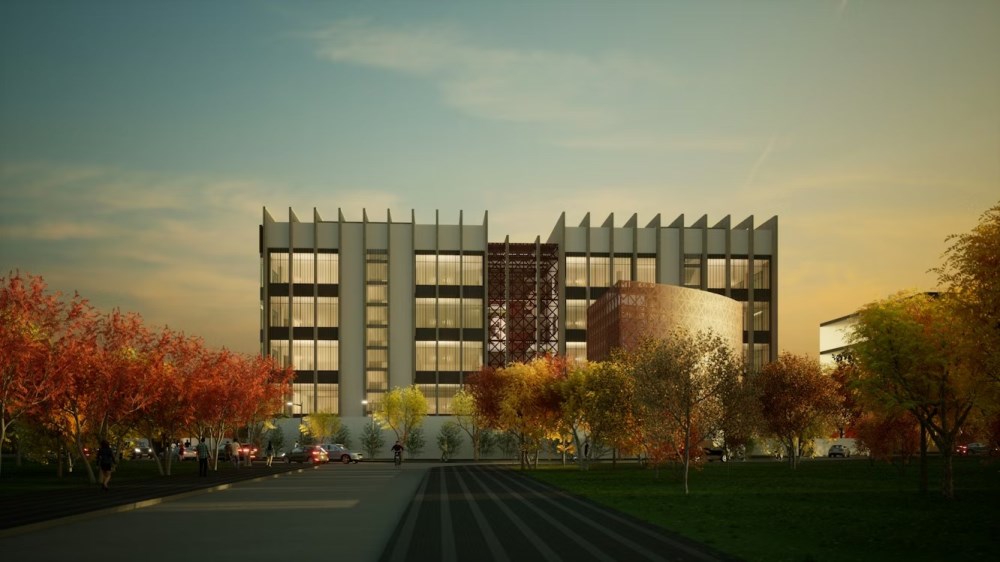
From Vague Sketches to Real-Life Models with 3D Architectural Rendering
According to Statista, a leading-edge statistics platform, the 3D rendering market is predicted to leap by 22% by 2026, hitting a staggering $9 billion by the end of the year.
Industry representatives have concluded that unprecedented demand for new-type houses is making a U-turn in the industry, while simultaneously taking digital design to new heights and smoothing the user pathway.
So, what is a 3D architectural rendering, and why is it still surrounded by myths within the architectural community? Multiple reasons speak for that, and we are going to address them at length.
From Origins to Modernity
Let’s start setting the stage. 14,000 years ago, the first depiction of a scrawled “human dwelling” was detected. Actually, it was a distant Paleolithic ancestor who scratched a hut on a miniature stone.
Humanity has matured, but in order to showcase their ideas, architects were still expected to make hand sketches or generate models. After all, how else could they envision a building that had not yet come into progress?
In 1998, the pioneering 3D visualization software, 3D Studio, was made public. It was grounded in ray tracing and developed for the MS-DOS operating system. The program was launched by a traiblazer studio, with four releases following one by one.
Later, that cutting-edge software was rewritten for Windows and renamed 3D Studio MAX. Its straightforward interface made it a breeze to master architectural knowledge, even for computer graphics novices.
Ahead of the Game
Today, no one will argue that 3D architectural visualization is reigning supreme, establishing itself as an unparalleled tool that addresses several issues simultaneously.
A long time ago, making precise axonometric drawings used to take endless months of work, and in the end, they couldn’t fully capture the full scale of one’s ingenious idea.
Under these circumstances, 3D rendering has been designed not only to mitigate potential errors made during the design stage but also to present the upcoming project in the most attractive light.
Why Turning to Progress Today
These are the main reasons why architectural firms, development companies, and real estate agents proactively utilize 3D visualization:
- 3D visualization is known to boost advertising effectiveness by 40%; in other words, it works for results–attracting customers, skyrocketing sales, and converting pent-up demand into purchases. And it’s not just that visual content is more captivating.
- On top of that, a 3D rendering allows you to showcase all the most tempting features of a future building–the surrounding landscape, parking lots, public gardens, sports and playgrounds–and thus, in essence, sells a dream, skillfully managing customer sentiment.
Is Architectural Rendering a Complex Process?

Yes, it is quite a challenging process, even if you heard the opposite. Based on complex mathematical calculations of how light interacts with surfaces, 3D rendering software simulates the laws of physics: refraction in glass, soft shadows from foliage, and the roughness of concrete.
All in all, for developers, this is a robust sales tool, and for architects, it’s a way to test their bold ideas before the first cube of concrete is even poured.
Basic Types of Rendering
- Exterior Visualization: Can you imagine your future construction within a fast-paced urban environment? Here, conveying atmosphere plays the first fiddle: the sunset, glare in the windows of neighboring houses, or the texture of wet asphalt following a heavy rainfall.
- Interior Rendering: Predictably, it focuses on tiny details, material quality, and lighting within a space. This allows for a “try-on” experience with furniture and finishes.
- Aerial photography (Bird’s eye view): A bird’s-eye view of the project helps make a hit with the scale of the development and infrastructure.
3D Case Studies
To comprehend the impact of renderings, let’s look at specific scenarios:
- Scandinavian-style residential complex: The architect employs renderings to show how the light wood of the facades will look against an overcast sky. The addition of lifestyle elements—people sipping coffee, cyclists on their bikes—creates an emotional connection with the customer.
- Renovation of a landmark: Visualizations allow the old brickwork to be combined with state-of-the-art glass extensions. This helps convince the city planning committee that the project will not detract from the city’s appearance.
- Concept art for a futuristic museum: Here, the rendering takes a tech-savvy approach. The use of fog, extraordinary lighting schemes, and vibrant angles emphasizes the avant-garde forms.
Master’s Tools
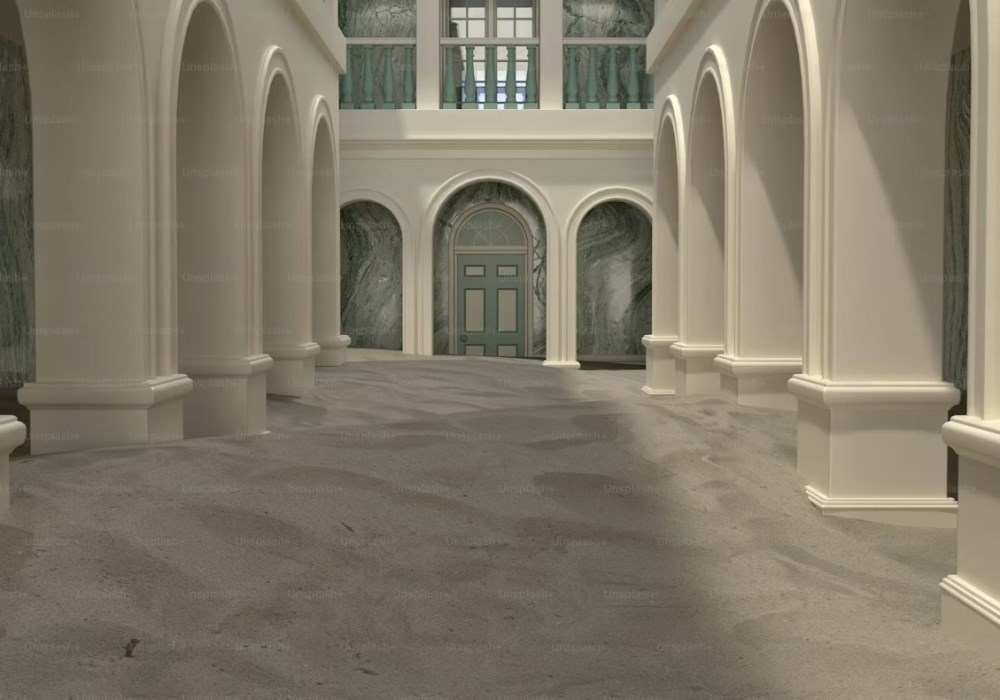
The market of today is divided into two massive camps. The first are offline renderers (V-Ray, Corona Renderer), which can spend endless hours calculating a single frame, with the aim to polish physical accuracy. The second are real-time engines (Lumion, Twinmotion, Unreal Engine), which allow you to instantly move around a scene, just like in a video game.
The Bottom Line
Architectural rendering is the art of metamorphosing drawings and 3D models into photorealistic images or videos. Today, it’s more than just an “image full of glamour,” but rather a vital bridge between the architect’s imagination and the client’s trust.


