

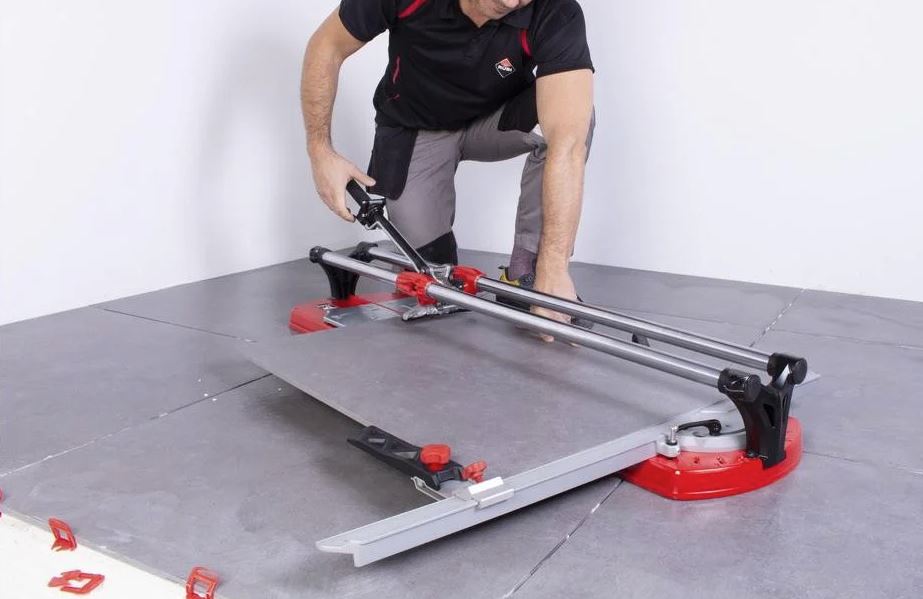
How to Get Perfectly Clean Snaps With a Manual Tile Cutter
Renovating a room is deeply satisfying, yet few moments rank worse than the sound of an expensive porcelain tile snapping down the middle of its face. Getting a crisp edge is rarely about power or expensive hardware. Instead, you need to develop an intuitive feel for how the material absorbs stress.
Properly operating a manual tile cutter relies on patience and a steady hand rather than raw strength. If you master the score and the snap, you eliminate the waste and aggravation that usually accompany DIY projects.
Laying the Groundwork for Accurate Cutting
Stability is the silent partner of every accurate cut. If your workstation wobbles or the tile shifts even a fraction of a millimetre, the integrity of your score line is ruined. Set your base on a firm, level surface. You should also clean the base of the tool thoroughly.
A single grain of grit or tile dust trapped under the material creates uneven pressure, which often leads to unwanted fractures when the breaking force is applied. Measure twice and mark your line with a sharp pencil. A thick, smudged line provides too much room for error, whereas a fine mark lets you align the wheel with the precision required for a crisp edge.
Masterful Technique for the Scoring Stroke
The scoring stroke is the heart of the operation. Many beginners fall into the trap of believing that deep, aggressive scoring yields a better break. Your real goal is creating a consistent, shallow incision in the glaze, which acts as the stress point where the tile naturally wants to split. Place the wheel at the far edge of the tile and pull it toward you in one fluid motion.
You want a rhythmic zipping sound as the wheel travels across the surface. If you feel the wheel stutter or skip, you are likely applying inconsistent pressure. Keep a moderate downward force uniform from start to finish, and do not lift the wheel before it clears the edge. This consistency ensures the glaze snaps cleanly across the span, allowing for easy tile installation on floors and other surfaces.
Executing the Final Break with Control
Once you have achieved a clean, uniform score, the transition to the snap requires a measured application of leverage. Patience pays dividends here. Position the breaking foot of the tool carefully. It should rest just behind the leading edge, typically within a few millimetres of the end. Many operators rush this phase, pressing down too quickly.
Instead, slowly increase the pressure on the lever, feeling for the moment the tile begins to flex. You are looking for a clean, singular separation. If the tile feels resistant, pause for a split second to ensure everything is aligned before applying the final, firm movement. By avoiding sudden shocks or jerky motions, you preserve the edge and prevent the jagged, unsightly breakout that plagues rushed work.
Managing Complex Cuts and Difficult Materials
Not every tile behaves the same way, particularly when you are dealing with dense porcelain or irregular mosaics. Harder materials often require a slightly more deliberate scoring stroke to ensure the wheel penetrates the glaze. Should you need to remove a very narrow strip, like a sliver cut, it is often safer to avoid the snap entirely.
Use a pair of tile nippers to gradually nibble away the excess material up to your score line. This method reduces the risk of the tile snapping in the wrong direction due to the lack of leverage on such a small piece.
Final Thoughts
Achieving clean, professional results with a manual tool is a skill refined through experience and attention to the small details. By prioritising a stable setup, executing a consistent and singular scoring stroke, and applying measured, patient pressure during the final break, you transform a potentially frustrating task into a rewarding element of your project.
Each tile you cut is an opportunity to practise the balance of tension and control. This brings you closer to that seamless, high-quality aesthetic that defines a well-executed renovation. Respect the material and trust your technique.


